Stephen Z. Lu

Hi! My name is Stephen (pronounced STEH-fən) and I am a Ph.D. student in computer science at UC Berkeley supervised by Prof. Yun S. Song. I completed my undergraduate studies at McGill University in my hometown of Montreal, Canada 🇨🇦.
My research focuses on machine learning approaches for protein sequence and structure. I am broadly interested in developing deep probabilistic models of protein evolution and dynamics. Recently, my work has centered on learning representations of antibody selection during affinity maturation [1], and building generative models for protein conformation sampling [2], [3].
Previously, I dabbled in small molecule generative models [4], [5] and agentic benchmarking for autonomous scientific discovery [6].
In my free time, I love playing pickup basketball, composing some funky songs on the piano, discovering new hiking trails, and spending time with my family and friends.
Feel free to reach out at stephen.lu@berkeley.edu if you’d like to chat about research or meet for coffee in the Bay Area!
selected publications
2026
- ICML, 2026 · * equal contributionWe introduce CoSiNE, a neural CTMC model of antibody affinity maturation that provably approximates the sequential point mutation process while disentangling selection from somatic hypermutation to enable inference-time affinity optimization.
2025
-
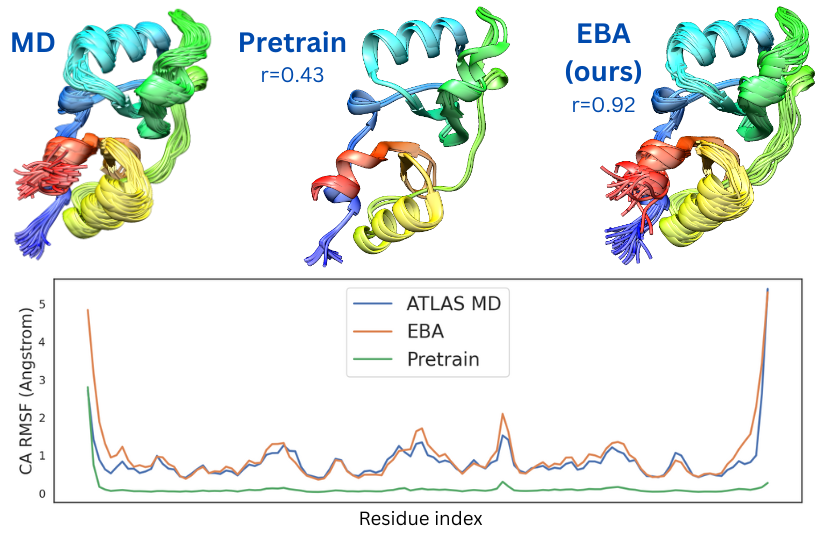 ICML, 2025We introduce Energy-based Alignment (EBA), calibrating protein conformation generative models with molecular energy feedback to thermodynamically weight conformational states at state-of-the-art accuracy on MD ensemble benchmarks.
 -
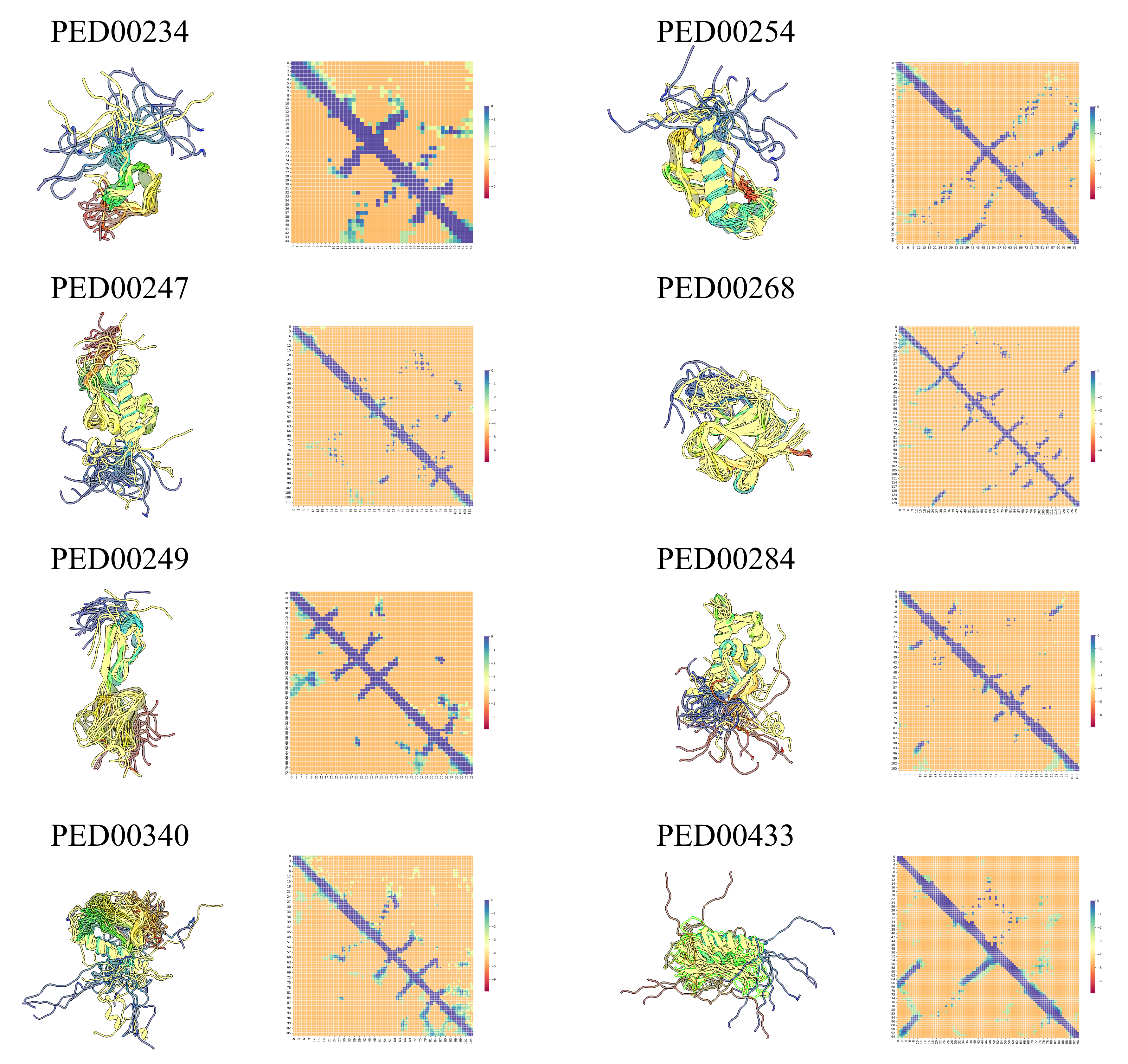 ICLR, 2025We introduce Structure Language Modeling (SLM), encoding protein structures as discrete tokens for autoregressive conformation generation that achieves a 20–100× speedup over diffusion-based methods while covering diverse ensemble modes.